
The Ultimate Guide to Anodized Aluminum Profiles: Durability, Trends, and Selection in 2026
In the world of modern construction and industrial design, few materials offer the versatility of anodized aluminum profiles. As we move through 2026, the demand for perfil aluminio anodizado continues to surge, driven by a global push for sustainable materials and high-performance facades. But what exactly makes this material the backbone of skyscrapers and electric vehicles alike? This comprehensive guide dives deep into the science, applications, and future of anodized aluminum, helping architects, engineers, and procurement specialists make informed decisions.
What is an Anodized Aluminum Profile? Understanding the Electrochemical Process
Before specifying materials, one must understand that anodizing is not merely a paint job or a coating. It is an electrochemical transformation that turns the aluminum surface into a durable, decorative aluminum oxide finish .
The Science of Surface Conversion
The anodizing process involves immersing extruded aluminum profiles in an acid electrolyte bath and passing an electrical current through the solution. The aluminum component acts as the anode, hence the name. This process forces the surface to oxidize, creating a layer of aluminum oxide (Al₂O₃) that grows outward from the base metal. Unlike paint which sits on top, this layer is integral to the substrate, meaning it cannot peel or flake . For high-gloss applications, manufacturers often use specific 6xxx series alloys with controlled iron content to minimize visible intermetallic particles that can dull the finish .
Architectural vs. Industrial Anodizing: Knowing the Thickness
Not all anodized finishes are created equal. The thickness of the layer dictates performance:
- Architectural Anodizing (Class I - 20 to 25 microns): Specified for exterior building applications where weather resistance is critical. Industry leaders like Hydro offer 25-year warranties against fading and peeling for profiles anodized to standards like BS3987 .
- Industrial Anodizing (Hard Coat - 25 to 50+ microns): Used for machine parts, pistons, and gearbox elements. This "hard coat" provides exceptional wear resistance and electrical insulation .
Key Properties: Why Specifiers Choose Anodized Profiles
The global anodized aluminum market, valued at approximately USD 3.8 billion in 2025, is expanding due to a unique combination of physical and aesthetic properties that outperform other materials .
Unmatched Corrosion and Weather Resistance
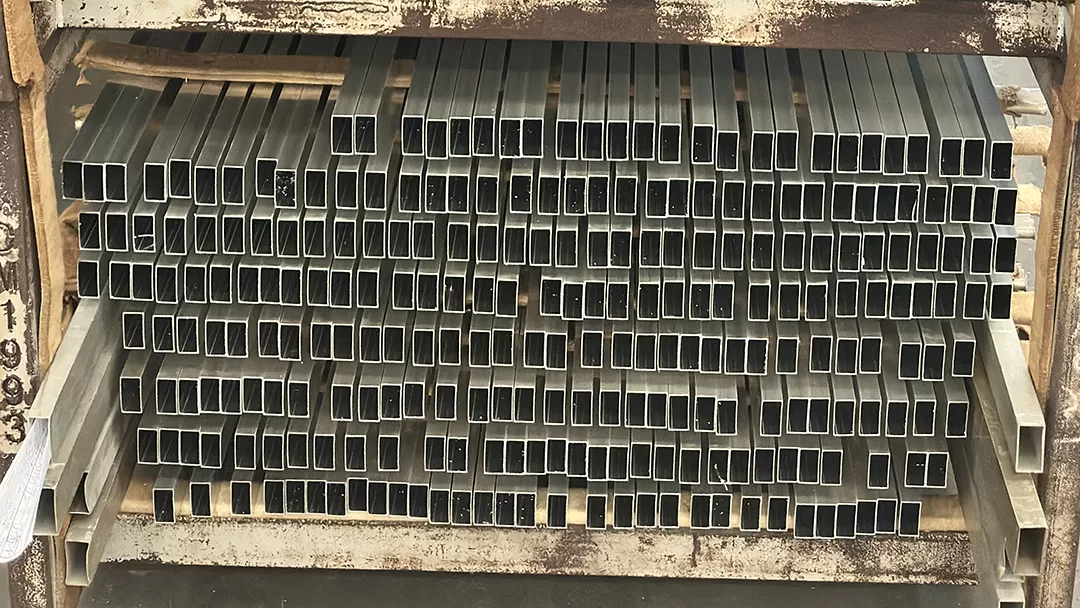
The porous nature of the anodic layer allows for "sealing," where the pores are closed via hydration (hot water or steam) to create a non-reactive surface . This makes perfil aluminio anodizado ideal for coastal installations and polluted urban environments. It significantly reduces the risk of filiform corrosion, a common failure in painted systems .
Thermal Management and Electrical Properties
In the age of electronics and LED lighting, the thermal conductivity of aluminum is paramount. The anodized layer acts as a dielectric (electrical insulator) while improving thermal emissivity. This means heat sinks made from anodized profiles dissipate heat more effectively than bare metal, preventing hot spots in electronic enclosures and power supplies .
Sustainability and Circular Economy
Anodizing is an environmentally friendly process. It produces no VOCs (Volatile Organic Compounds), and the primary byproduct is recyclable. Furthermore, the aluminum profile itself is infinitely recyclable without loss of quality. This contributes to green building certifications like LEED, making it a favorite for eco-conscious construction projects .
Top Applications Driving the Market in 2026
The versatility of anodized profiles means they penetrate nearly every sector of the economy. Recent market forecasts predict the aluminum profiles market will reach $139.4 billion by 2034, with anodized finishes capturing a significant share of the value-add .
Architectural Marvels: Facades and Structural Glazing
In modern architecture, green anodized finishes are trending for their ability to blend structures with natural landscapes . Beyond color, the structural integrity of anodized aluminum is used in curtain walls and window frames. The material"s ability to withstand UV radiation without chalking or fading ensures that building exteriors retain their sleek, modern appearance for decades .
The EV Revolution and Automotive Lightweighting
The automotive industry, particularly electric vehicle (EV) manufacturers, relies heavily on anodized profiles. They are used in:
- Battery Trays and Housings: Requiring high corrosion resistance to protect sensitive cells.
- Crash Management Systems: Extrusions that absorb impact.
- Interior Trim: Where the premium, scratch-resistant feel of anodized surfaces enhances the luxury perception .
Industrial Automation and T-Slot Framing
The rise of Industry 4.0 has skyrocketed the demand for modular T-slot profiles. These anodized aluminum frames are used for machine guards, workstations, and conveyor systems. The anodized layer provides a hard, low-friction surface that resists wear from constant adjustment and cleaning .
H3: Renewable Energy Infrastructure
Solar panel frames and mounting structures are massive consumers of anodized aluminum. The finish must withstand 25+ years of direct sunlight and thermal cycling. Anodizing ensures the frames do not degrade, maintaining the structural integrity of solar farms .
H2: How to Select the Right Anodized Aluminum Profile
Choosing the right profile involves more than just picking a color. Procurement is shifting from buying "sticks" of aluminum to buying systemized solutions .
Alloy Composition Matters
For applications requiring a high-gloss, mirror-like finish, the alloy must be carefully selected. Patents and technical guidelines suggest alloys with low iron (Fe) content (typically <0.12%) to avoid surface imperfections. Alloys like 6063 are standard for architectural work, while 6061 or 6082 are chosen for higher strength requirements in industrial settings .
Quality Certifications and Standards
When sourcing profiles, look for compliance with international standards. The Qualanod mark or compliance with BS3987 ensures the anodizing quality has been independently verified. In Europe, pressure is mounting for Environmental Product Declarations (EPDs) to verify the low-carbon footprint of the billet used .
H3: The Shift to "Kitted" Solutions
To reduce on-site labor costs, suppliers are moving towards pre-machined, pre-drilled kits. Instead of ordering raw lengths, contractors order "kits" that include the profile, fasteners, gaskets, and end caps, all precisely fabricated and labeled for rapid assembly .
The Future: Technological Innovations in Anodizing
The industry is not static. Continuous innovation is expanding the capabilities of anodized aluminum.
H3: Nano-Technology and Self-Healing Coatings
Emerging technologies involve controlling the anodizing process to create nano-porous structures. These structures can be engineered for specific functions, such as enhanced paint adhesion or even self-healing properties where the coating can repair minor scratches through the migration of sealants .
H3: Advanced Color Matching and Digital Integration
The days of inconsistent color lots are ending. Modern anodizing lines offer precise control over dye absorption, allowing for custom colors that match brand guidelines exactly. Furthermore, BIM (Building Information Modeling) libraries now include digital twins of these profiles, allowing architects to simulate thermal performance and aesthetics before a single brick is laid .
Conclusion
The perfil aluminio anodizado is far more than a simple metal component. It is a high-tech, sustainable, and durable solution that meets the demands of the 21st century. From the soaring facades of green buildings to the critical components of electric vehicles, its role is indispensable. By understanding the nuances of alloy selection, anodizing thickness, and market trends, industry professionals can leverage this material to build a future that is not only stronger and lighter but also more beautiful and sustainable. As the market grows towards $139 billion, the value of quality anodized finishing will only become more pronounced
- Conocimiento del sector
- Información de la feria
- Información del producto
-

Anodized Aluminum Profiles: The Ultimate Guide to Durability, Design, and Industrial Applications
In the worlds of modern architecture, advanced manufacturing, and industrial design, few materials offer the versatility and resilience of anodized aluminum. When searching for perfil aluminio anodizado, industry professionals are typically looking for more than just a piece of metal; they are seeking a solution that combines structural integrity with a premium, long-lasting finish. Anodized aluminum [...]
-
Beyond the Finish: Why Anodized Aluminum Profiles Dominate Modern Architecture and Industry
Walk through any modern city center, and you are walking through a gallery of anodized aluminum. The shimmering curtain walls, the sleek storefronts, the durable handrails that show no sign of wear despite years of use—these are the signatures of a material that has been transformed, not just coated. For architects, engineers, and manufacturers, the [...]
-
The Definitive Guide to Anodized Aluminium Profiles: Properties, Applications, and Market Insights 2026
In the worlds of modern architecture, industrial automation, and high-end product design, few materials strike the perfect balance between form and function like the perfil aluminio anodizado (anodized aluminium profile). While standard aluminium offers a lightweight and strong foundation, the anodizing process transforms it into a premium product with unmatched durability and aesthetic longevity. If you are [...]
-
The Ultimate Guide to Anodized Aluminum Profiles: Durability, Trends, and Selection in 2026
In the world of modern construction and industrial design, few materials offer the versatility of anodized aluminum profiles. As we move through 2026, the demand for perfil aluminio anodizado continues to surge, driven by a global push for sustainable materials and high-performance facades. But what exactly makes this material the backbone of skyscrapers and electric vehicles alike? [...]



-
Faltan solo 2 días para la apertura de GLASSTECH México 2025
Petrel Aluminio llegará al recinto ferial con sus productos más recientes, y los invita cordialmente a visitar nuestro stand para conocer a fondo nuestras últimas soluciones en perfiles de aluminio para arquitectura e industria. Dirección del evento: Centro Citibanamex, Hall A, CDMXFecha del evento: 16 – 18 de julio de 2025 Ventajas de Petrel Aluminio [...]
-
Glasstech México 2025 Se Acerca!!!
Hoy es 25 de junio de 2025 — ¡faltan solo 21 días para la inauguración de Glasstech México 2025! Petrel Aluminio presentará nuestras últimas soluciones personalizadas en perfiles de aluminio en este destacado evento de la industria.¡Esperamos verte en la feria! ¿Por qué elegir a Petrel Aluminio? ¿Quieres saber más sobre nuestros productos y servicios?Visita [...]
-
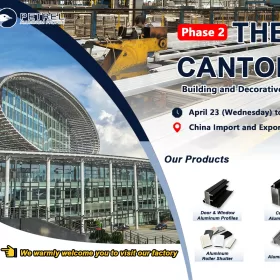
¡Bienvenidos a Visitar Nuestra Fábrica Durante la 137ª Feria de Cantón
La 137ª Feria de Importación y Exportación de China (Feria de Cantón) – Fase 2 (Materiales de Construcción y Decoración) Como fabricante con 20 años de experiencia en extrusión de aluminio, Petrel Aluminio invita cordialmente a todos los clientes internacionales que viajen a China por la Feria de Cantón a visitar nuestra fábrica durante el [...]
-
¡Bienvenidos a la 137ª Feria de Importación y Exportación de China (Feria de Cantón)!
📅 Fechas de la Exposición La 137ª Feria de Cantón está programada para abrir oficialmente el 15 de abril de 2025. 🏢 Exposición Presencial por Fases: 📦 Categorías de Exhibición

-
Petrel Aluminio lanza una nueva serie de colores anodizados para perfiles de aluminio
En la industria de puertas y ventanas arquitectónicas, los perfiles de aluminio no solo cumplen una función estructural, sino que también son un elemento clave de expresión estética. Para satisfacer la creciente demanda de acabados arquitectónicos refinados y diseños interiores de alta calidad, Petrel Aluminio ha perfeccionado su tecnología de anodizado y lanza con orgullo [...]
-
Perfiles de Aluminio con Recubrimiento en Polvo Gris Oscuro — Precisión y Flexibilidad en Cada Detalle
En Petrel Aluminio, mantenemos un compromiso constante con la innovación tecnológica y la mejora de la calidad. Nuestra fábrica ha puesto en marcha un nuevo proyecto: perfiles de aluminio con recubrimiento en polvo gris oscuro, producidos mediante una línea de recubrimiento en polvo horizontal equipada con pistolas automáticas suizas Gema, que garantizan un acabado eficiente, [...]
-
Serie de Perfiles de Aluminio Personalizados para el Mercado de Indonesia
Indonesia, como un claro representante del clima de selva tropical, experimenta altas temperaturas, humedad y lluvias intensas durante todo el año. Sumado a la fuerte radiación solar y al rápido desarrollo urbano, las puertas, ventanas, muros cortina y materiales de revestimiento exterior enfrentan grandes desafíos ambientales. En tales condiciones, elegir el perfil de aluminio adecuado [...]
-
Perfiles de Aluminio Personalizados para Puertas y Ventanas en Colombia
En la industria de la construcción, los sistemas de puertas y ventanas en diferentes países y regiones presentan preferencias de diseño y requisitos de rendimiento únicos. Para servir mejor a los clientes de América Latina, Petrel Aluminio ha lanzado un nuevo proyecto: una serie de perfiles de aluminio especialmente diseñados para el mercado colombiano. Table [...]